
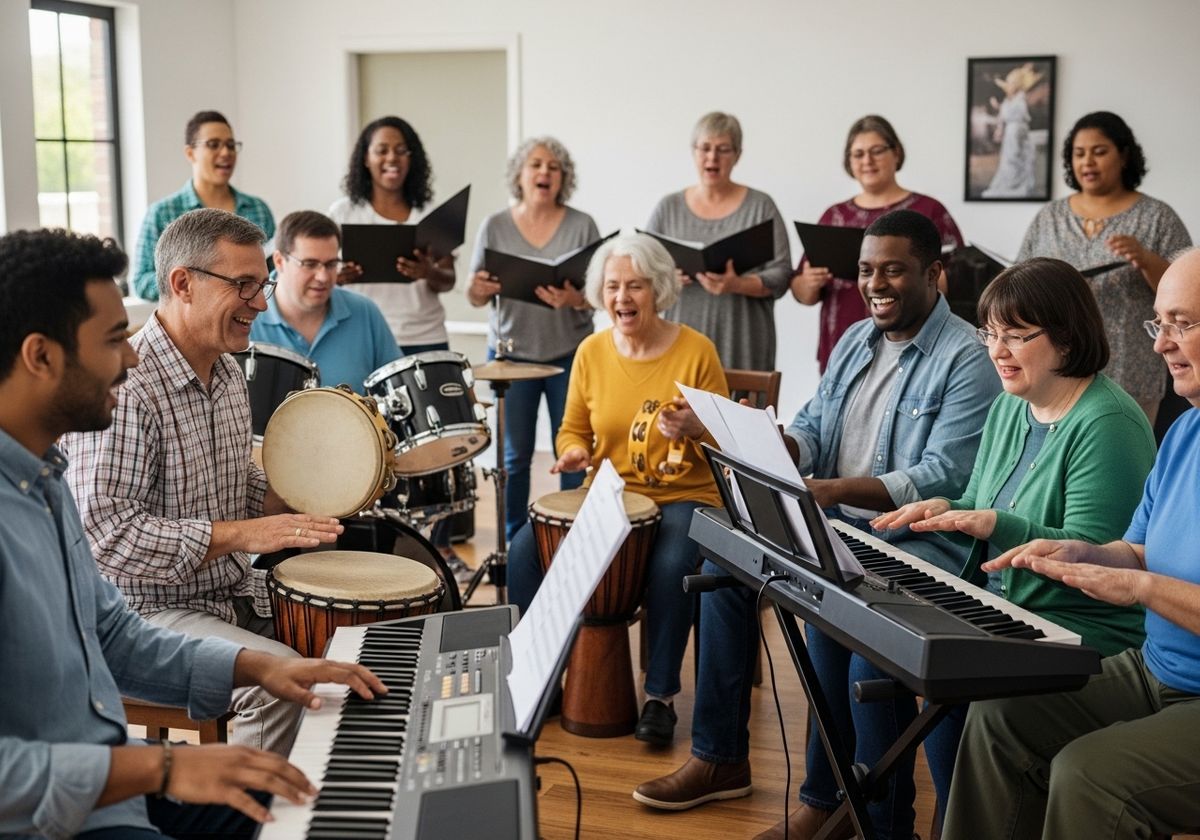
Music therapy offers a unique and powerful approach to enhancing the well-being of adults with intellectual disabilities (ID). It's a creative outlet and a therapeutic modality that can unlock potential and improve quality of life. Here's a closer look at the benefits of music therapy for adults with ID:
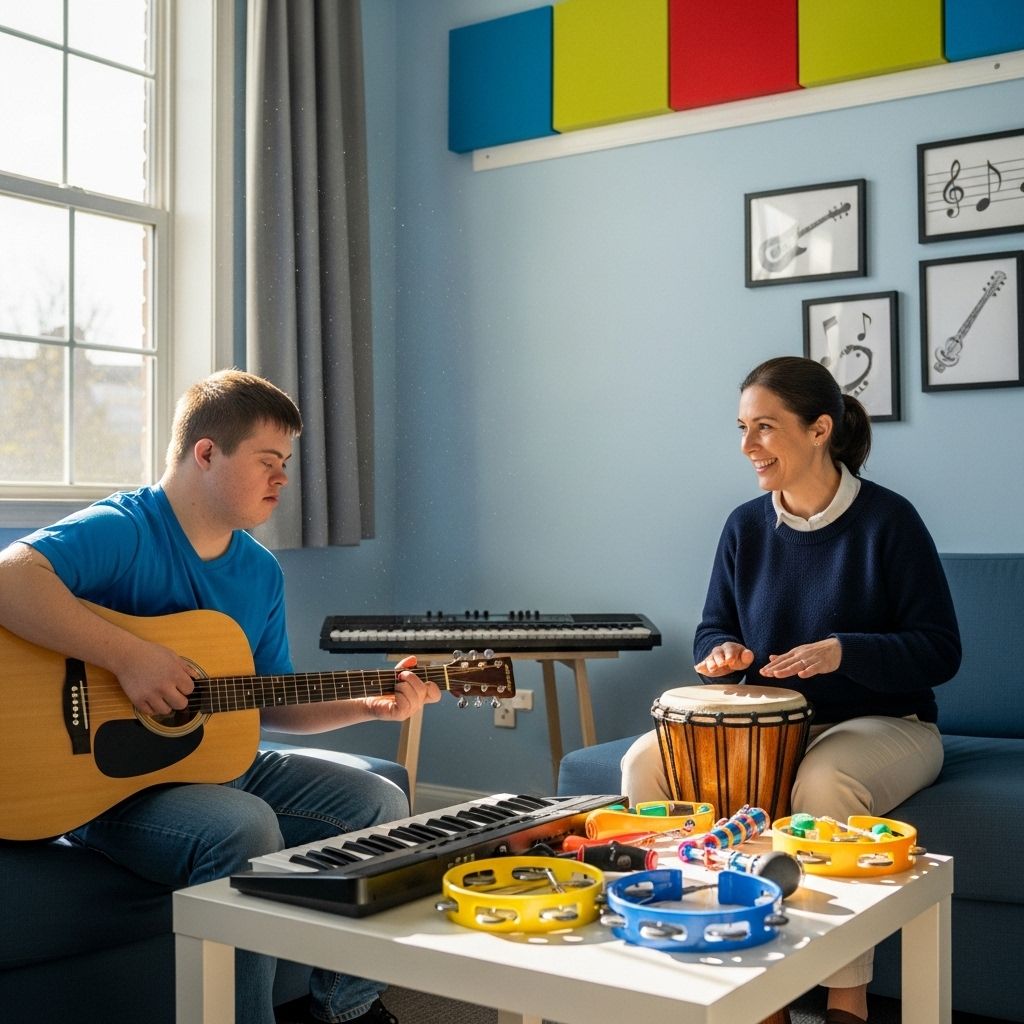
Enhancing Communication Skills
For individuals who may have difficulty expressing themselves verbally, music provides an alternative channel for communication. Through singing, playing instruments, or even just listening to music, adults with ID can express emotions, thoughts, and ideas that they may struggle to articulate otherwise. Music therapy can improve receptive and expressive language skills by encouraging participation and engagement.
Promoting Emotional Well-being
Music has a profound impact on our emotions. Music therapy can help adults with ID manage stress, anxiety, and depression. The rhythm and melody of music can be calming and soothing, providing a sense of relaxation and emotional release. Music therapy sessions offer a safe and supportive environment for individuals to explore and process their feelings, leading to improved emotional regulation and overall well-being.
Improving Cognitive Function
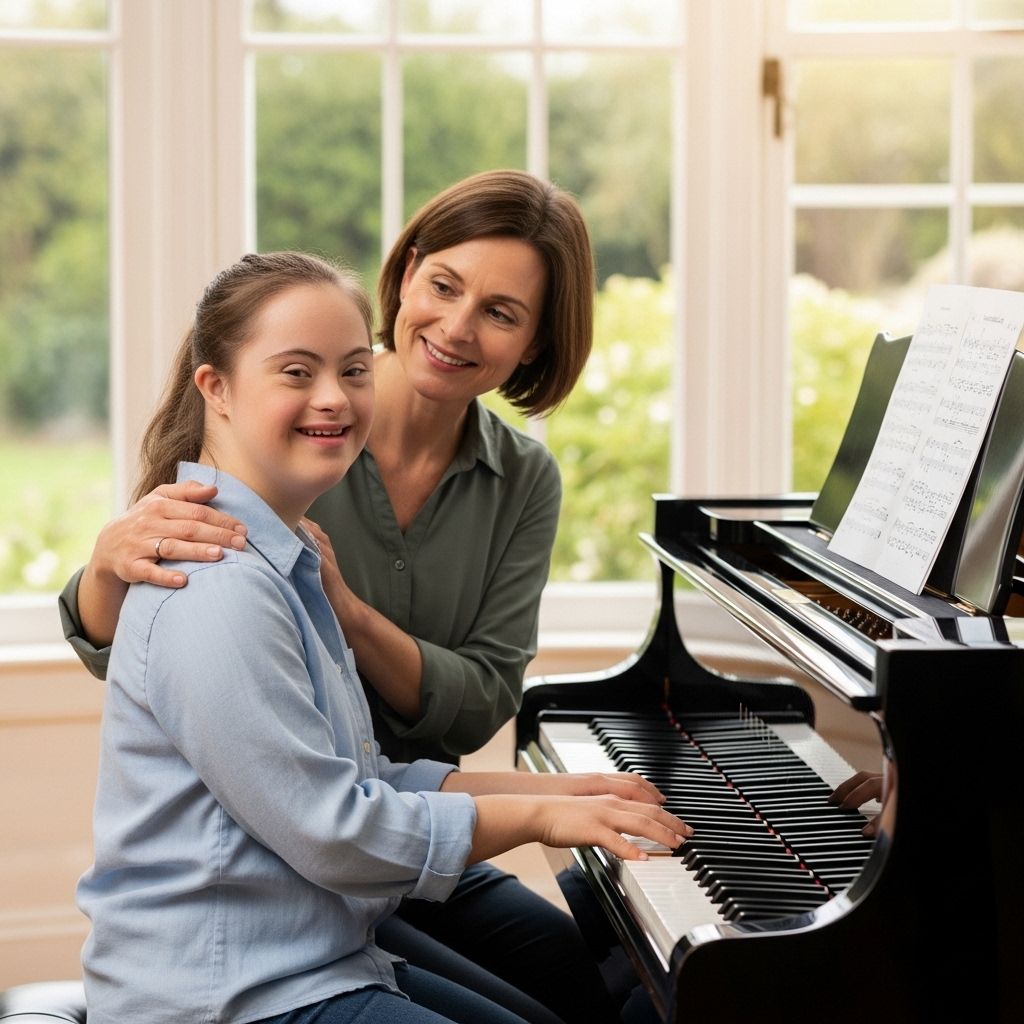
Engaging with music activates various parts of the brain, stimulating cognitive function. Music therapy can enhance memory, attention span, and problem-solving skills in adults with ID. Learning to play an instrument, following musical patterns, or participating in group music activities can all contribute to cognitive development and maintenance.
Fostering Social Interaction
Group music therapy sessions provide opportunities for social interaction and connection. Adults with ID can develop social skills, build relationships, and learn to work collaboratively through shared musical experiences. Playing in a band, singing in a choir, or simply making music together fosters a sense of belonging and community, reducing feelings of isolation and loneliness.
Encouraging Physical Activity
Music can be a powerful motivator for physical activity. Music therapy sessions often incorporate movement and dance, encouraging adults with ID to engage in physical exercise in a fun and engaging way. This can improve motor skills, coordination, and overall physical health. The rhythm of the music provides structure and support for movement, making it easier for individuals to participate and enjoy physical activity.
Music therapy offers a holistic approach to supporting adults with ID, addressing their emotional, cognitive, social, and physical needs. Excellent Care Inc. understands the importance of providing comprehensive supportive living services and access to therapies that enhance the lives of those in care homes for adults and assisted living for disabled adults. To learn more about our approach to adults with disabilities and the therapies we offer, please contact us today or visit our website.